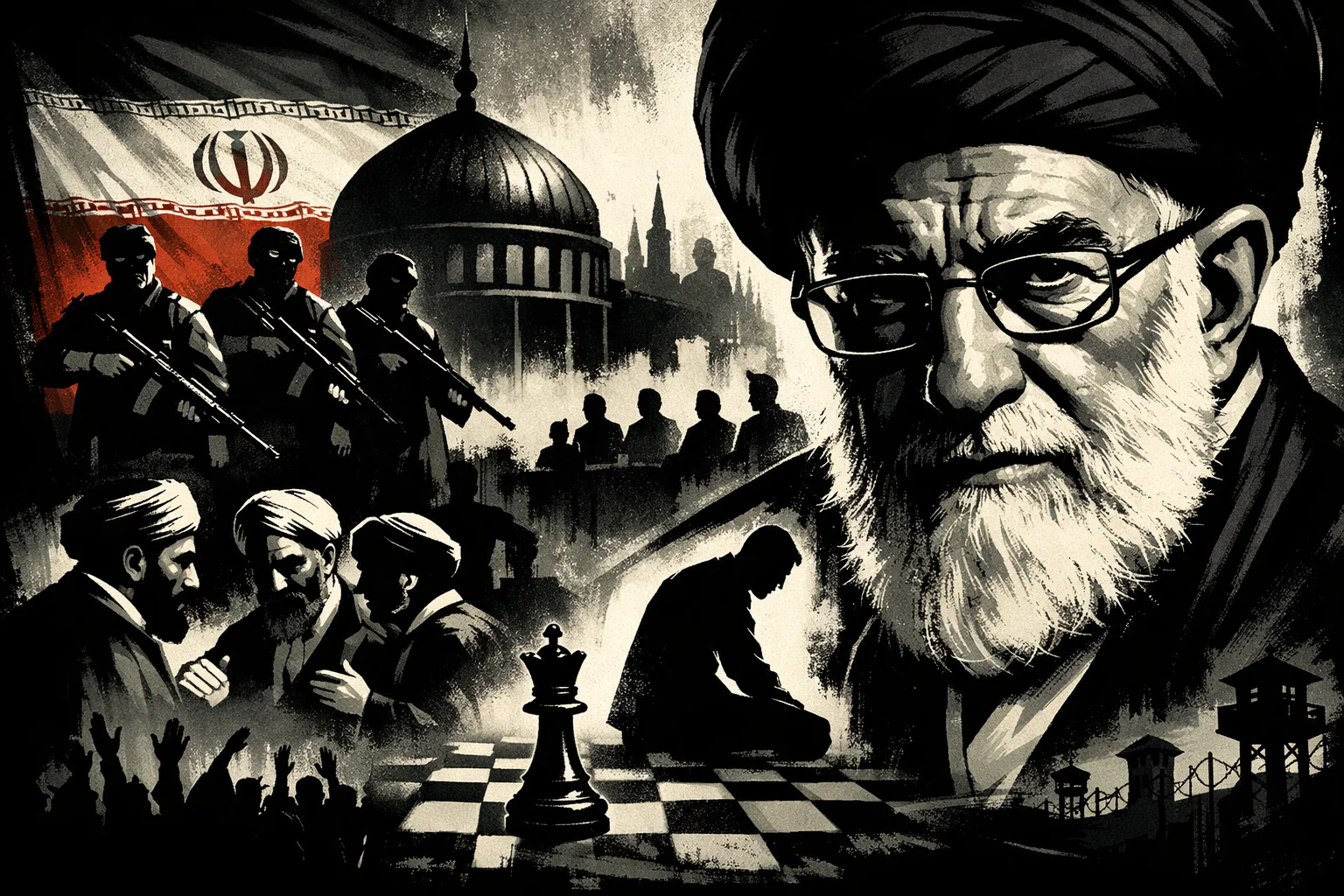
In the last hours of the developments of the crisis that began with the February 28 strikes, the scene moved from a "wide military escalation" to a politically and operationally pivotal moment: an official Iranian announcement of the death of the Supreme Leader, indications of a change in the center of gravity within the governance structure, the expansion of the repercussions of the response to Gulf and civilian arenas through the fall of shrapnel and interceptions, then the danger moved to the sea by targeting a tanker off Oman.These developments - as reported by reliable sources - mean that the "event" is no longer limited to an exchange of blows, but has entered the stage of rearranging power within Iran and expanding the circle of regional risks in the air and at sea.
The most important announcement so far is that Reuters reported that Iranian state media confirmed the death of Supreme Leader Ali Khamenei following US-Israeli strikes. The significance of this announcement is not only symbolic; it directly opens the question of "transition management" within the regime, because the position of the leader is the top of the political-religious pyramid in Iran.Reuters reported that influential figures such as Ali Larijani have emerged as a "power broker" in the absence of the leader, suggesting that the regime is moving towards temporary arrangements to control the transition and prevent a political vacuum.This does not mean that the succession has been decided, but it does mean that the "center of gravity" has begun to move towards mechanisms that ensure the continuation of the decision, which is a decisive factor in assessing the directions of escalation: will Tehran look for internal stabilization first or external escalation to impose a new deterrence equation?
On the military leadership line, a second highly significant announcement emerged: Iranian television said that Chief of Staff Abdul Rahim Mousavi was killed in the strikes. (The information here is from a media report and not a published military statement with full details, but it remains a "possible statement" that has weight in reading the leadership's ability to manage continuous responses).If this loss is true, it means that the targeting was not just a "message" but a blow deep in the chain of command, which raises the possibility that the patterns of response may change: from traditional controlled responses to broader or asymmetrical responses, especially if Tehran sees that the "rules of the game" have changed by targeting the top of the political and military pyramid.
On the other hand, developments have not stayed within Iran. In the Gulf, what can be described as "intercept fallout" has appeared in civilian areas: Reuters reported that two people were injured in Dubai after shrapnel associated with air intercepts fell over homes.This point is important because it reveals the nature of the risks in this type of confrontation: even when defenses succeed in intercepting, the risk of shrapnel and debris remains, which prompts countries to raise the level of warnings and impose operational restrictions (aviation, ports, protection of facilities). The occurrence of casualties - even if limited - turns the "arena of response" from a threat to bases and facilities to political pressure on Gulf governments to protect the interior and prevent the clash from spilling over into people's daily lives.
The maritime track also witnessed a notable new development. Reuters quoted Oman's Maritime Security Center as saying that an oil tanker (Skylight) was attacked off the coast of Oman near Musandam, and that its crew of 20 was evacuated, with four crew members injured.This development adds a different layer of risk: instead of just airspace and missiles, the "sea" itself becomes a pressure cooker for energy chains. For markets, the impact of a maritime targeting is often immediate even before a major disruption in supplies, as shipping and insurance companies react quickly to any incident near sensitive points.
Reuters reports that nine people were killed in Karachi during protests and clashes near the US consulate after the news of Khamenei's death. This is not a "military front," but it is an indication that the shock is beginning to generate cross-border political and security repercussions, which further complicates international crisis management: escalation has the potential to provoke protests or violence in areas far from the line of fire.
If we combine these developments into a "single picture", there are three practical conclusions (which do not require big assumptions):
- The crisis has moved from the stage of "strikes and retaliations" to the stage of hitting the command center inside Iran, with the sensitivity of power transfer and potential escalation.
- Risks have expanded to include cities and civilian infrastructure in the Gulf through shrapnel and intercepts, increasing the pressure for internal protection and increasing the likelihood of tighter operational restrictions in aviation and ports.
- The "sea" entered the risk front immediately after the tanker incident off Oman, a factor that usually accelerates shipping and insurance decisions and deepens energy volatility.
For the moment, the most sensitive element remains: how Iran will manage its political transition after the announcement of the killing of the leader, and how it will balance between internal stabilization and continued external response. Larijani's appearance as a central player in the Reuters coverage indicates a trend towards interim arrangements for state administration, but the direction of policy (de-escalation/escalation) will depend on the decisions of the security and political establishment in the coming hours.On the other hand, the expansion of damage and casualties beyond the immediate battlefield increases the likelihood that several countries will tighten protective measures and operational restrictions, which could make the "regional turmoil" itself part of the crisis pressure, not just a byproduct.
Comments