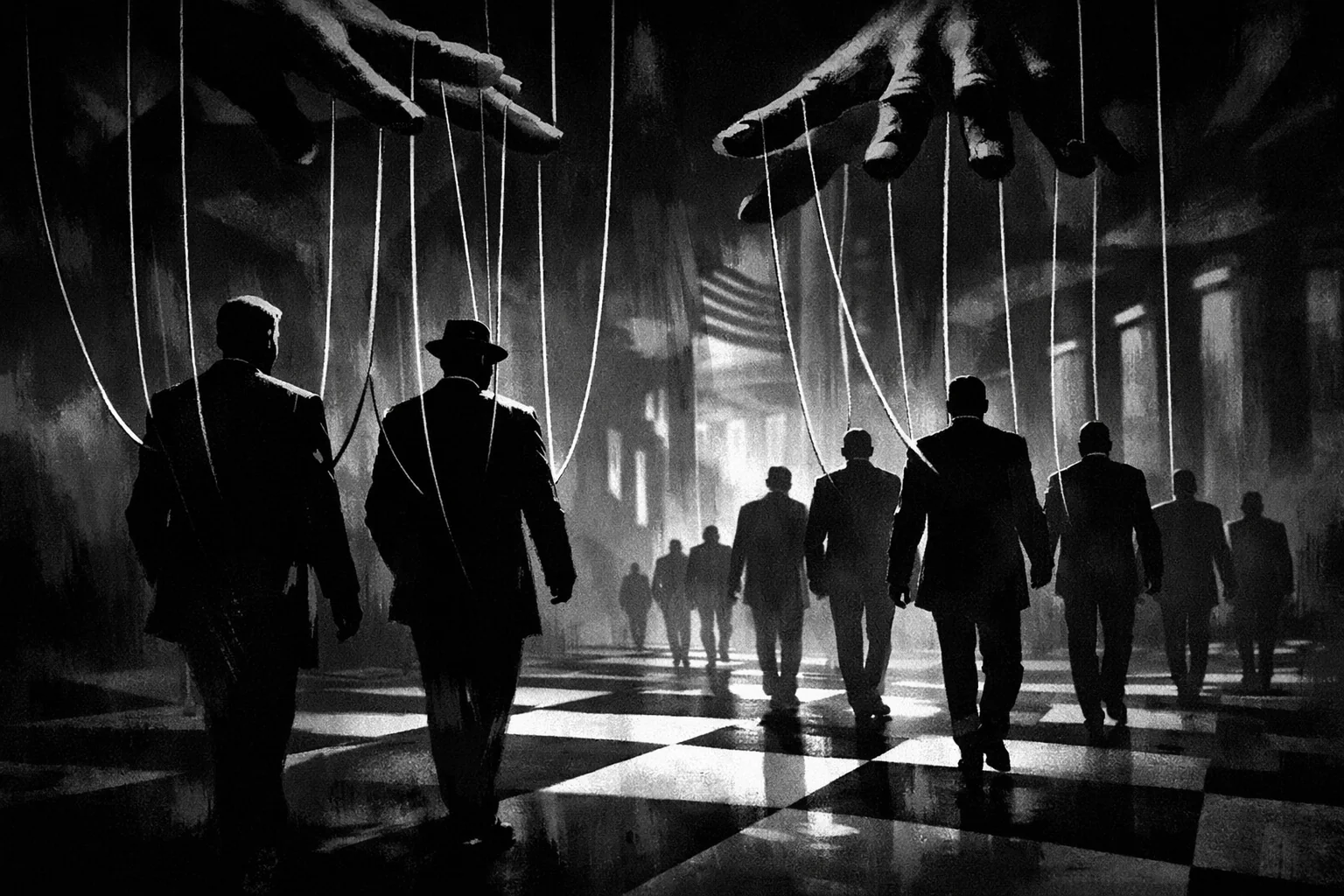
One of the keys to understanding continuity in US foreign policy is the legal and institutional framework that governs the work of the state. Policies towards certain countries are not only formulated through presidential speeches, but are enshrined in laws, treaties, congressional resolutions, and accumulated executive orders.Economic sanctions, for example, are often codified in legislation that is difficult to repeal without legislative approval, making policy change a complex and lengthy process. Studies by official research institutions indicate that new presidents inherit a dense legal system that restricts the margin of maneuver, even when there is a clear political will for change.
In this institutional context, the law does not operate in isolation from the executive bureaucracy that implements and reproduces these policies on a daily basis. In addition to the law, the bureaucracy plays a pivotal role in perpetuating continuity. Foreign policy and national security agencies are highly professionalized and relatively independent, with staff and experts who remain in their positions through successive administrations.They do not just mechanically implement policies; they make recommendations, formulate alternatives, and determine what is "realistic" or "unworkable." This does not mean that they oppose change for its own sake. Rather, their assessment is often based on long institutional experience that makes them more cautious about radical shifts that might upset existing balances.
The Pentagon and the military-industrial complex are a key safety valve for the continuation of certain foreign orientations. The United States maintains a huge global military "footprint" through bases and forces distributed in Europe and Asia and permanent military stations, which cannot be eliminated once the president changes.Analysts assert that about half of Pentagon spending is given directly to large defense companies (e.g., Lockheed Martin and others). This link between military policy and commercial profitability creates an interconnected web of interests. Although this spending is often justified by a budget that serves "soldiers," studies suggest that much of it is due to pressure from special industry interest groups.Moreover, arms companies use their profits to support ideas that justify new wars: they fund research institutes to produce studies that justify military interventions and employ their experts in national security staff positions and shape political agendas. This cycle has come to be called the "military-industrial complex," where corporate and military interests move together to escalate conflicts as needed. This mixed influence between the military and industry partly explains the persistence of the military confrontational approach and the swelling of US defense budgets across different administrations.
U.S. intelligence and security institutions are no less important in this context. U.S. intelligence agencies (such as the CIA) have built close partnerships with allied agencies in permanent intelligence alliances (such as the "Five Eyes" with Britain, Canada, Australia, and New Zealand). These networks ensure a constant exchange of information on global threats and establish a shared vision of key adversaries (such as Iran, terrorist organizations, or Chinese or Russian strategy).These memory and intelligence structures cannot be severed and dismantled by a change of president, which helps keep the main lines of foreign policy intact-for example, U.S. intelligence and diplomatic coordination within these deep alliances continues regardless of any leadership change.
Industry and financial lobbies also play an important role in solidifying constants. For example, the energy sector is a prominent element of power: major American companies have played a pivotal role in the history of Washington's relationship with oil-rich countries, especially Saudi Arabia. Official sources have confirmed that "protecting Saudi Arabia and Gulf producers" has been a key pillar of U.S. foreign policy for decades.This is why oil interests have remained a stable pillar in the formulation of major lines, even if political periods witnessed temporary differences. This intertwining between strategic economic interests (such as oil and defense) and the political decision-maker ensures that there is no radical deviation from the existing political path.
These think tanks are active in producing and promoting ideas by holding seminars, workshops, hearings before parliamentary committees, and issuing research and policy patents. The researchers of these centers often move between their corridors and executive positions; in times of change, some of them work as advisors or members of evaluation committees, then return to their research institutes.Observers note that the funding of these centers is often linked to large industrial actors, especially in the defense sector; their research principles often support scenarios of military interventions and the imposition of strategic frameworks that serve the interests of these industries. As a result, an advanced ideological layer is formed that promotes the same strategic consensus, which reinforces the stability of policies and transforms ideas into an agenda for decision-makers.
For example, every administration without exception has treated Iran as a strategic enemy: Washington has imposed strict economic sanctions on Tehran since the 1979 Islamic Revolution for its support of terrorism and its nuclear drive. Despite varying degrees of aggression or some attempts at diplomatic maneuvering (such as the nuclear deal under Obama and a return to toughness under Trump), the sanctions stance has been consistent and hardline.Scholars have written that "U.S. sanctions on Iran have escalated under five successive presidents," indicating a "broad partisan consensus" on this approach. Similarly, the United States has maintained its strong support for Israel through administration after administration; a famous analysis found that U.S. policy in the Middle East is "largely centered around its close relationship with Israel" thanks to the activities of the "Israel lobby" in America.Both Trump and Biden have expressed their belief that China is seeking to surpass the United States, and both political parties have agreed to consider China as the number one geopolitical enemy, leading both administrations to intensify their alliances and impose similar technological and financial restrictions. As for the policy towards Russia, it remained on its general course in the context of continuing to contain Russian influence, despite some tactical differences in discourse. Relations with Saudi Arabia also continued within the traditional alliance; the fusion of oil and security interests between Washington and Riyadh remained clearly present, showing how economic pressure networks influence maintaining a stable context
In short, these examples show that U.S. foreign policies toward several countries (Iran, Israel, China, China, Saudi Arabia, and Russia) have not undergone a radical reversal with each change in presidency, but have maintained remarkable continuity. This is due to the synergy of accumulated strategic interests and the enduring institutional structures (military, intelligence, and economic) that support these policies.
Comments