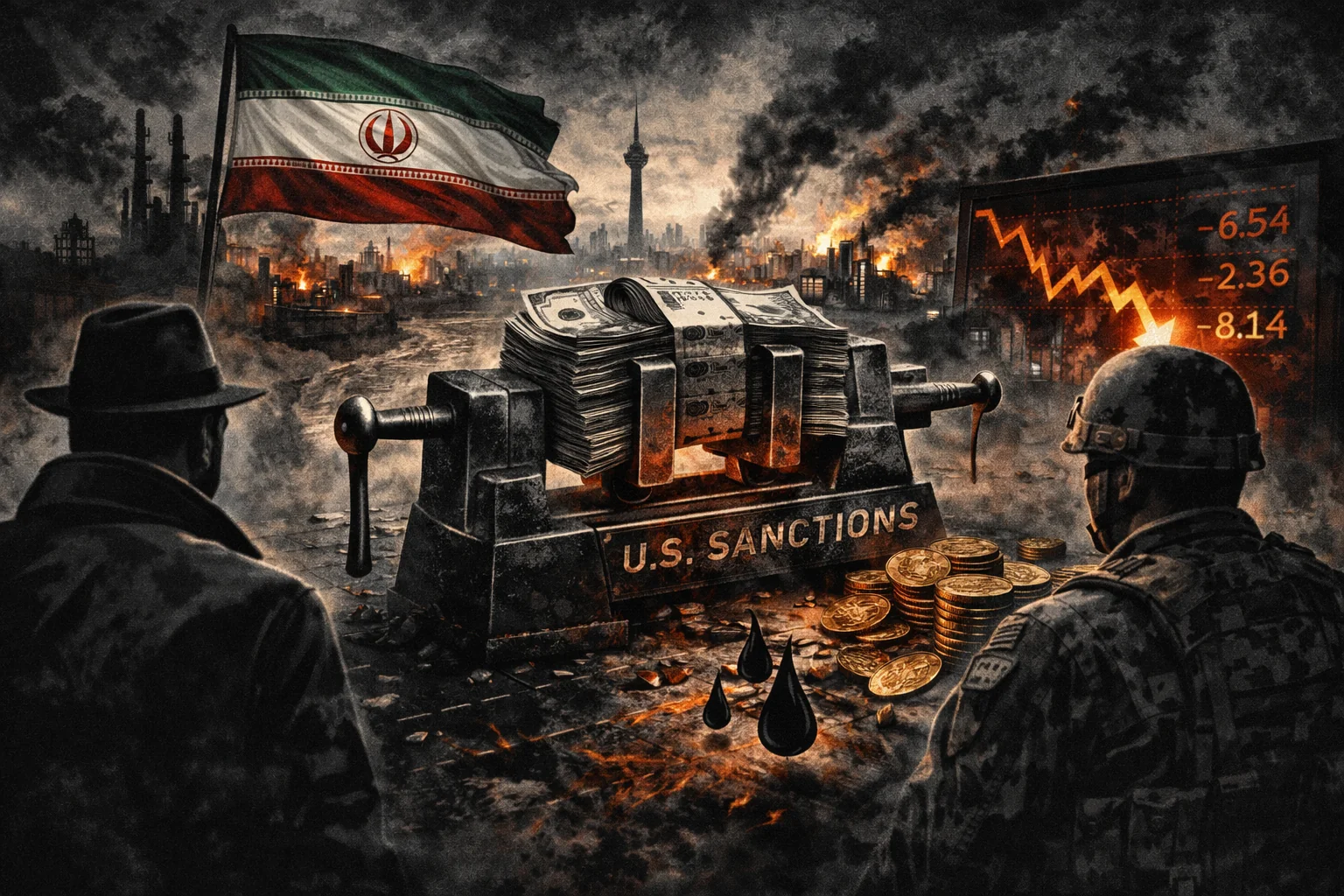
This is the most reliable update to date for Friday, March 6, 2026 on the U.S. attack on Iran and the associated war, based on Reuters and the Associated Press. The overall picture today is: New military escalation, expanded attacks on Gulf states hosting US troops, political pressure in Washington, and greater disruption to energy, navigation, and supplies.
On the military front, Reuters and AP reported that Israel expanded its strikes this morning to Beirut and deep into Iran, while AP said the US targeted an Iranian drone carrier at sea and CENTCOM released footage of the ship on fire. AP also reported that B-2 bombers dropped armor-piercing bombs on ballistic missile launchers buried inside Iran, striking what it described as Iran's "space command counterpart." Meanwhile, Reuters reported that Israel launched a new wave on Tehran, while the Revolutionary Guard announced that it had carried out a joint operation with missiles and drones targeting sites in the "heart of Tel Aviv."
In the Gulf today, Iranian attacks targeted countries hosting U.S. troops. AP reported that Qatar announced the interception of a drone attack targeting al-Udeid base, Saudi Arabia said it intercepted three ballistic missiles heading towards Prince Sultan base, Bahrain said Iranian strikes targeted two hotels and a residential building with no fatalities, and Kuwait said its air defenses were activated after missiles and drones penetrated its airspace. Reuters also confirmed a drone attack on al-Udeid airbase with no immediate reports of casualties.
In terms of casualties reported so far, Reuters said that at least 1,230 people have been killed in Iran since the fighting began a week ago, according to the Iranian Red Crescent, the Lebanese Health Ministry reported 123 dead and 683 wounded from Israeli strikes, while at least 10 Israelis have been killed in Iranian attacks. The war has also left six American soldiers dead, the AP reported.
Politically in the US, the day saw continued political cover for the campaign. Reuters reports that the US House of Representatives rejected by 219-212 a bill that would have required President Donald Trump to obtain congressional authorization for any military action against Iran, a day after the Senate shot down a similar measure. However, Reuters explained that the War Powers Act still gives the administration a 60-day window before congressional approval is needed, putting an approximate date at the end of April.
In the strongest US statements today, Reuters and AP reported that Trump went even further politically, saying he wanted the US to have a role in choosing Iran's next supreme leader, after Ali Khamenei was killed in the opening strikes of the war, according to this coverage. He was also quoted by Reuters as supporting the idea of Iranian Kurdish forces based in Iraq opening a ground front against Iran, which could mean a further expansion of the war if realized. In contrast, Iranian Deputy Foreign Minister Saeed Khatibzadeh said, according to Reuters, that Iran is not deliberately targeting its Arab neighbors, but rather US bases on their territory.
Inside Iran itself, AP reported that a leadership council of senior officials has begun discussions on how to invite the Assembly of Experts to choose a new leader, without announcing a clear timeline. Reuters added that talk of a quick succession may have stalled, after the three-day mourning period was postponed indefinitely.
Regionally, a growing Gulf complaint about the management of the crisis also surfaced today. The Associated Press quoted Gulf officials as saying that some governments were angry that they did not receive enough warning before the US-Israeli first strike, and that US defenses focused more on Israel and US forces than on protecting Gulf allies. According to AP, since the start of the war, Iran has fired at least 380 missiles and more than 1,480 drones at five Gulf states, killing at least 13 people in those countries, as well as six U.S. soldiers in Kuwait. The AP also reported that the US even asked for Ukraine's help because of its expertise in intercepting Shahid's drones.
Economically, the impact of the war on energy was even more pronounced today. Reuters reported that the Strait of Hormuz is virtually closed, cutting the world off from about a fifth of the world's oil and liquefied natural gas supplies. Reuters also said that Brent crude this week climbed 20% to $87.50 and WTI crude rose 25% to $84.77, the biggest weekly gain since Russia's invasion of Ukraine in 2022. Reuters also reported that fuel oil shipments from the Middle East to Asia via Hormuz have fallen by nearly 90%, and high-sulfur bunker fuel prices in Singapore have jumped more than 40% since the start of the war.
On the logistical and humanitarian front, Reuters said the war has disrupted supply chains and effectively halted shipping through Hormuz, stopping or delaying aid shipments to Gaza and Sudan and raising the cost of transportation. It also quoted aid organizations as saying that shipping companies have imposed contingency fees of around USD 3,000 per container, and that some stranded shipments now need to detour around the Cape of Good Hope, adding up to three weeks to the journey time.
In terms of the next US preparations, Reuters reports that the White House will meet today with major defense companies, including Lockheed Martin and RTX/Raytheon, to accelerate production of ammunition and weapons after stocks were depleted in the Iran strikes and other recent operations. She noted that an additional budget request of nearly $50 billion for the Pentagon is likely.
The bottom line so far: March 6 did not see a de-escalation, but an expansion of the war: New US and Israeli strikes, continued Iranian attacks on bases and positions in the Gulf, a political escalation in Washington's rhetoric, and a further deterioration in energy, navigation and relief. The picture is still very much in flux, but what is certain today is that the war has become more regionalized than in previous days, and that the cost of its continuation is rising militarily, economically, and humanly.
Comments