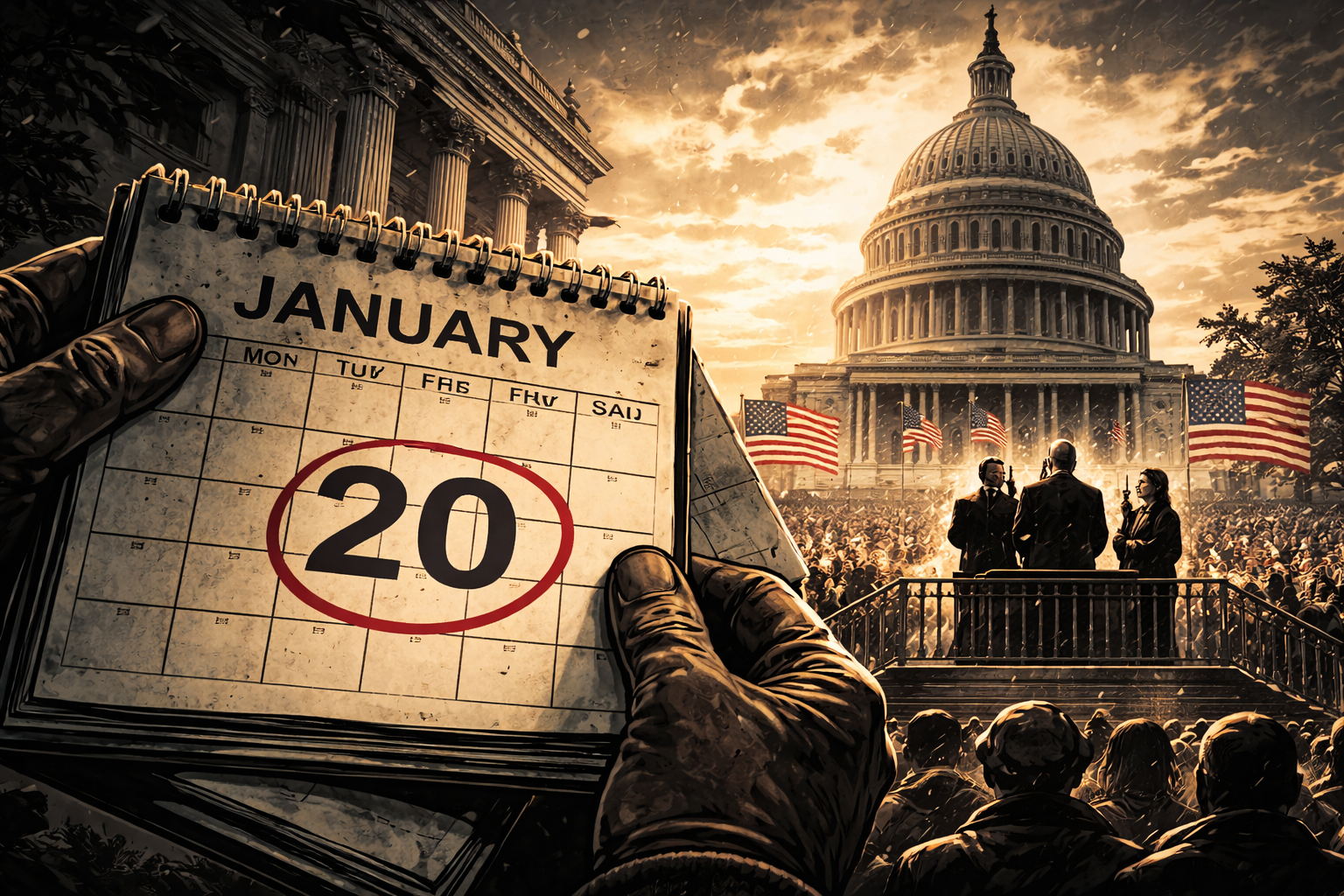
The United States' choice of January 20 as inauguration day is not a protocol detail, but the result of a "constitutional reform" that came after a long experience in which the country discovered that a slow transition of power could turn into a political and economic danger. The inauguration date has not always been in January; from the beginning of the republic until the early 20th century, the inauguration took place on March 4. This date made sense in an era of slow travel and limited communications: The country needed more time to count the results, assemble Congress, and have officials arrive in the capital. But with the development of the state, railroads, telegraphs, and then the telephone, this long wait seemed more like a "relic of an earlier age" than a practical necessity.
The issue that prompted the change is known politically as the "Lame Duck" period: The months following the November elections, when a losing president or Congress remains in office even though its popular mandate has effectively expired, while the president-elect stands with no real powers. In this period, big decisions can be made by a power that is on its way out, or urgent decisions can be delayed because everyone is waiting for the next one. With the crises of the twentieth century, especially the economic and political turmoil, it became clear that the "transition vacuum" is not just a boring wait, but a dangerous window that may further complicate crises. This is why the idea of reducing the gap between elections and inauguration began as a step to enhance democratic stability and prevent potential constitutional crises.
The solution came in the form of the Twentieth Amendment (also known as the "Lame Duck Amendment"), adopted in 1933. This amendment moved the beginning and end of the terms of the president and vice president from March 4 to January 20 (at noon), and moved the date of the new Congress to January 3. The idea here is not to "move up the party," but to get the newly elected institutions up and running faster, so that the new Congress is in place before the new president, and there is less time for a "politically expired" authority to exist after the election. With this move, the transition period is shortened by several weeks, and the president-elect has enough time to prepare, but without keeping the country in a state of political waiting for months.
Why January 20? Because it represents a practical balance: It gives enough time after the November elections to officially count the results, make transition arrangements, convene the new Congress in early January, and then hand over power to the new president before the end of January. Importantly, the amendment itself makes provision for exceptional cases: If January 20 falls on a Sunday, the public swearing-in ceremony is held the following day (January 21) to avoid constitutional and ritual conflicts with Sunday.
In this sense, the choice of January 20 reflects a pragmatic American philosophy of legitimacy management: What matters most is not the symbolism of the date, but minimizing the "dead time" between the voters' decision and the start of actual governance. Although Inauguration Day has become a huge ritual over time, its real root is a constitutional reform aimed at protecting the state from the cost of a long wait and translating the will of the electorate into executive power as quickly as possible without jeopardizing the stability of the transition.
Comments