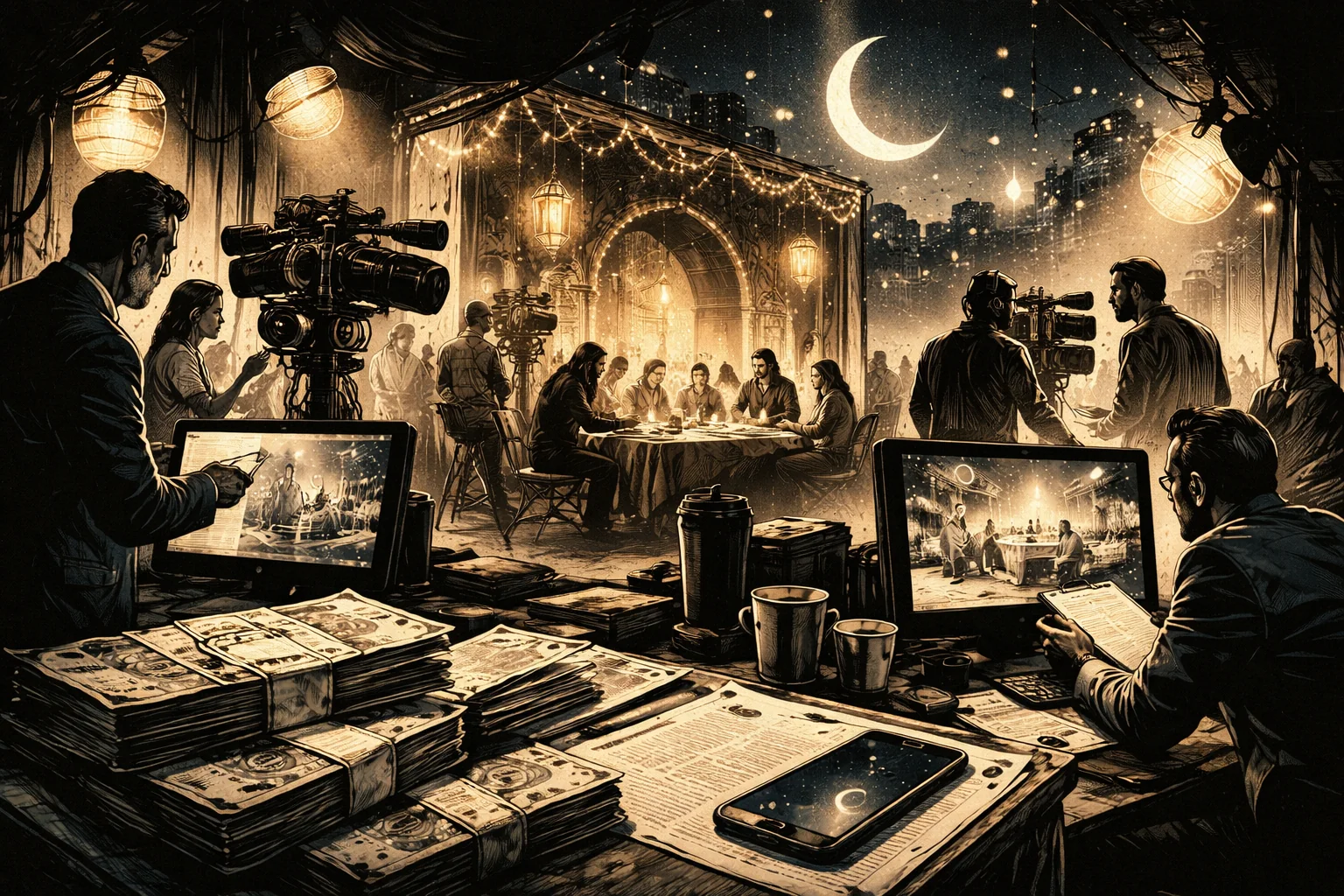
When the Ramadan economy is mentioned, attention usually turns to food markets, iftar tables, and changing consumption patterns. But the most exciting and perhaps most influential aspect of this season is the advertising and content industry. In many Arab and Muslim countries, Ramadan is considered the "golden season" for TV and digital advertising, not only because of high consumption rates, but also because of a profound shift in collective mood, viewing patterns, and social behavior. Here, ads are not just sold as time slots, but as strategic opportunities to build a long-term emotional connection between the brand and the audience.
Ramadan has a temporal specificity that is rare in the media economy: there is a daily, near-uniform moment when millions of people gather around the Iftar table and then in front of the screen. This collective moment makes "time" a doubly valuable commodity. Advertising space that might be measured in seconds during the rest of the year is measured in Ramadan in terms of impact, reach, and symbolism. Brands compete aggressively for prime time slots, especially during the airing of popular Ramadan series and programs.
But what makes Ramadan advertising different is not just the high viewership, but the nature of the message itself. Ads during this month often carry narratives of family, generosity, reunification, tolerance, and gratitude. Even when it comes to a purely consumer product, the message is wrapped in spiritual and social values.An ad for a soft drink may turn into a story about a father waiting for his children at the Iftar table. An ad for a telecommunications company may become a tale about bonding or supporting those in need. This merging of spiritual values and commercial messages does not happen randomly, but reflects a marketing intelligence that understands that Ramadan is not just a consumer market, but a collective emotional state.
Economically, Ramadan is turning into an intensive content production cycle. TV production companies are preparing their work months in advance, digital platforms are launching their interactive campaigns, and influencers are reshaping their discourse to match the atmosphere of the month. The ads themselves are no longer just short breaks; they have become "mini-dramas" that can last for minutes and garner millions of views on digital platforms.
This shift reveals a deeper concept that can be called "emotional economy." In Ramadan, the value of an ad is not only measured by the number of impressions, but also by its ability to evoke feelings of belonging, nostalgia, and empathy. Audiences are more willing to engage with messages that touch on human values. Hence, the brands that succeed are not necessarily those that showcase their product directly, but those that integrate it into a human story.
On the other hand, this scene raises an ethical question: To what extent can spiritual values be used to serve commercial goals? Is the line between sincere expression of values and their exploitation for promotion becoming more blurred? Some critics argue that this overlap may turn religious and social sentiments into marketing tools, while others see it as a natural reflection of the market's interaction with the dominant culture.Ultimately, advertising is part of the social fabric, and is affected by what affects it.
Digitalization has added a new dimension to the Ramadan advertising economy. While television has traditionally been the primary platform, digital platforms are now competing strongly. Campaigns today are not limited to airing an ad, but include interactive challenges, hashtags, contests, and short-form content for smartphone users. This multichannel approach gives brands the ability to target different segments while maintaining the Ramadan narrative.
In purely economic terms, Ramadan is a time of recovery for many media-related industries: production companies, directors, scriptwriters, designers, and marketing teams. It is a season when advertising budgets are redistributed and significant investments are made in short-term but high-impact campaigns. Some brands build their entire identity on their annual Ramadan presence, with audiences waiting for their ad like they wait for a new series.
In the end, Ramadan advertising reflects a deep understanding of the relationship between economics and culture. The market here does not operate in isolation from values, but rather overlaps and reshapes them. Ramadan is not just a month where sales rise; it is a moment in time where collective emotions intensify and advertising becomes a tool to tell a story bigger than the product itself. While the scene may appear commercial on the surface, at its core it reflects a complex interaction between soul and market, between collective memory and marketing message.
Thus, the Ramadan advertising industry is not just a seasonal activity, but a mirror of an economy that understands that real impact is not only measured by the volume of sales, but by the depth of the relationship built with the audience in a shared emotional moment.
Comments