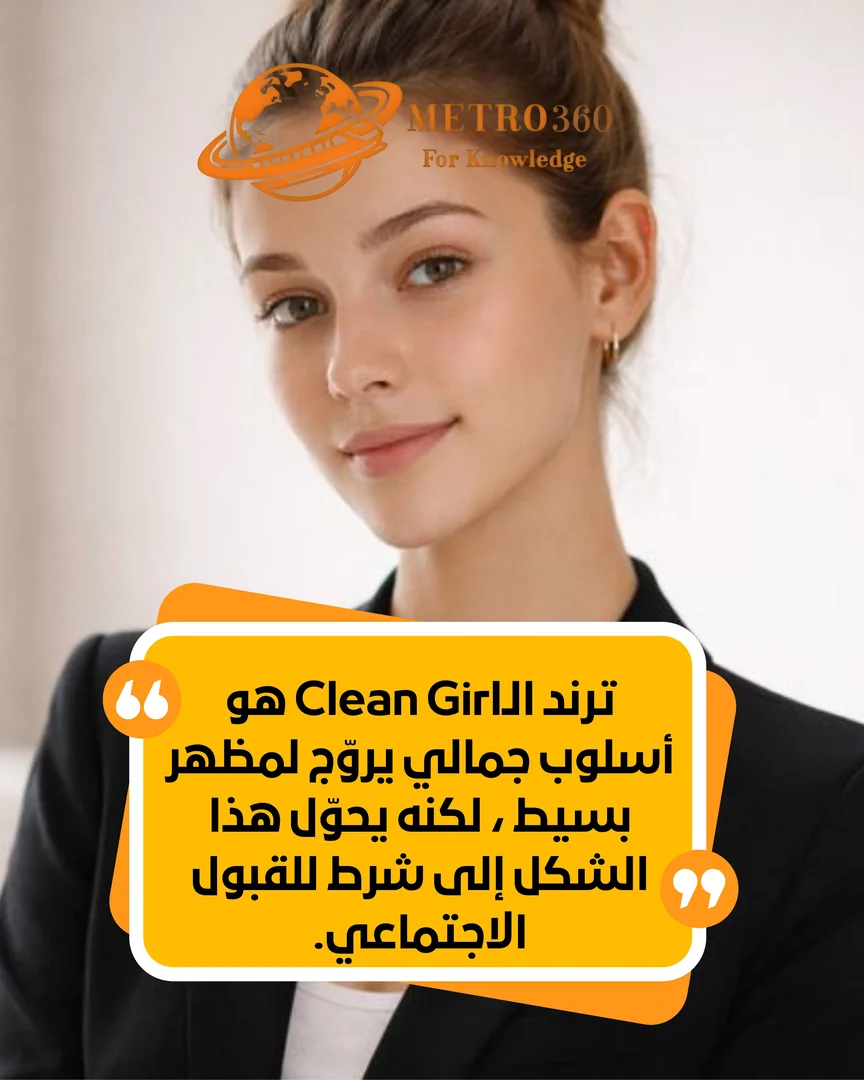
The Clean Girl trend seems like a simple invitation: A calm face, neutral colors, neat hair, and "natural" features that suggest purity and comfort. The issue is that "simplicity" isn't just a taste, it's quickly becoming a new social norm that defines who looks "acceptable" and who looks "sloppy." And with platforms like TikTok and Instagram, that's no longer the case. With platforms like TikTok and Instagram, this standard is no longer confined to photos, but becomes an everyday language that the eye unconsciously observes: Those who master it look successful and comfortable, and those who don't feel left behind.
This aesthetic presents itself as a freedom from exaggeration, but it constructs an "ideal" of another kind: The ideal of perpetual tranquility, of always glowing skin, of a tidy house, of an organized schedule, of a light-hearted smile. Here the meaning of "clean" changes from a sensory description to an implicit moral judgment: Clean means disciplined, conscious, healthy, and in control of one's life. As a result, beauty becomes a kind of social validation: The closer you are to this look, the more you seem to be "living right". This slippery slope is dangerous because it confuses human values with a decorative appearance.
From a consumer perspective, this "simplified beauty" turns into a long chain of products and rituals: A multi-step grooming routine, "invisible" makeup that requires skill and time, perfumes, serums, masks, hair tools, and "basic" but expensive designer clothes. The market is good at selling feeling: It doesn't just sell you a moisturizer, it sells you a promise of poise and reassurance. Rationalization becomes a mask for repeated purchases, and "less" becomes a way to buy "more" but with smaller packages and elegant rhetoric. Even the concept of "purity" is used as a rationalization: Clean ingredients, clean life, clean mind... although the reality is more complex than a label on a package.
The stress comes when aesthetics becomes a daily test of comparison. When you see hundreds of videos showing "perfect mornings," "perfect skin," and "perfect routines," you may feel like you are the only one who gets tired, stressed, and messed up. This creates a cycle: Social comparison, anxiety, an attempt to compensate with purchases or harsh discipline, and then disappointment that life doesn't always look the same. Most importantly, this trend can narrow the space for diversity: Different skin tones, study fatigue, family stress, and financial circumstances are all realities that don't show up in the polished cadre. Therefore, "purity" becomes a class and temporal privilege as much as a taste.
The alternative is not to reject beauty, but to deconstruct its power. Style can be enjoyed without turning it into a judgment of self or others: Choose what works for you rather than what pleases the algorithm, set limits to follow-ups that provoke comparison, and remember that self-care is neither a public spectacle nor a race. When we reclaim our right to complexity, we understand that the value is not in "appearing clean" but in living realistically and compassionately with oneself.
Comments